By Edge Realty
If your garage has become the default dumping ground for everything that doesn't have a home elsewhere, you're not alone. For most homeowners in Narragansett and throughout Rhode Island, the garage starts with good intentions and slowly fills up with sports gear, seasonal items, tools, and boxes that never quite make it to their final destination. The result is a space that can't live up to its potential, whether that's a functional workshop, a clean storage hub, or even a second parking spot you've been meaning to reclaim.
The good news is that organizing a garage doesn't require a massive renovation budget or a full weekend lost to chaos. With the right strategy and a little planning, you can turn even the most overwhelming garage into a streamlined, easy-to-maintain space. The tips below will break down the process into manageable steps so you can make real, lasting progress.
Whether you're preparing your Narragansett home for the market or simply want a space that actually works for your lifestyle, a well-organized garage signals care, intention, and smart use of every square foot. It also adds tangible value, since buyers pay close attention to storage and functional space when evaluating a home.
Key Takeaways
- Starting with a full purge before adding any organization system is the most important first step.
- Grouping items by category and use frequency makes the finished system far more intuitive to maintain.
- Vertical wall space and ceiling storage are two of the most underused assets in any garage.
- Labeling and consistent zones prevent the gradual slide back into clutter over time.
- A well-organized garage can meaningfully boost your home's appeal to buyers in the Narragansett real estate market.
Start With a Complete Purge
No organization system works if it's built around items you don't need. Before you buy a single shelf bracket or storage bin, the first step is pulling everything out and making honest decisions about what stays. This is where most people stall, so it helps to set a specific time block and commit to finishing the purge in a single session.
Sort everything into four categories: keep, donate, sell, and discard. Be realistic about the items in your "keep" pile. If you haven't touched something in two or more years and can't name a specific reason you'll use it again, it's likely time to let it go. Seasonal equipment, hobby gear, and duplicate tools are common offenders.
Once you've reduced what you're working with, you'll have a much clearer picture of the storage solutions you actually need. Organizing a half-empty garage is infinitely more successful and effective than trying to make too much stuff fit into too little space.
Questions to Ask During the Purge
- Does this item still work, and would I replace it if it broke?
- Does this belong in the garage, or would another area of the home make more sense?
- Have I used this in the past two years?
- Is this item worth the square footage it occupies?
- Could someone else get more use out of this than I do?
Create Dedicated Zones
Once you know what you're keeping, the next step is to plan your zones before anything goes back in. Zones are dedicated areas for specific categories of items, and they're the backbone of any system that stays organized over time. Think of this as giving everything in your garage a permanent address.
Common zones in a well-organized garage include a tool area, a sports and recreation zone, a gardening section, a seasonal storage area, and a utility or cleaning supplies corner. The specific zones you create should reflect how your household actually uses the space.
Position your zones based on the frequency of use. Items you reach for regularly should be at eye level and easy to access. Seasonal bins, holiday decorations, and rarely used gear can go higher up or further back. This simple logic reduces frustration and helps you maintain the system because putting items away is easy.
How to Map Your Garage Zones
- Place frequently used items near the entry point for quick access.
- Keep garden and yard tools near the garage door or exterior wall for convenient outdoor access.
- Assign an area near the back or overhead for seasonal storage, such as holiday bins or beach gear used only a few months per year.
- Keep a utility zone with cleaning supplies and house maintenance items in a consistent, easy-to-find spot.
- Leave clear walking paths between zones so that the space feels open and accessible.
Maximize Vertical and Overhead Space
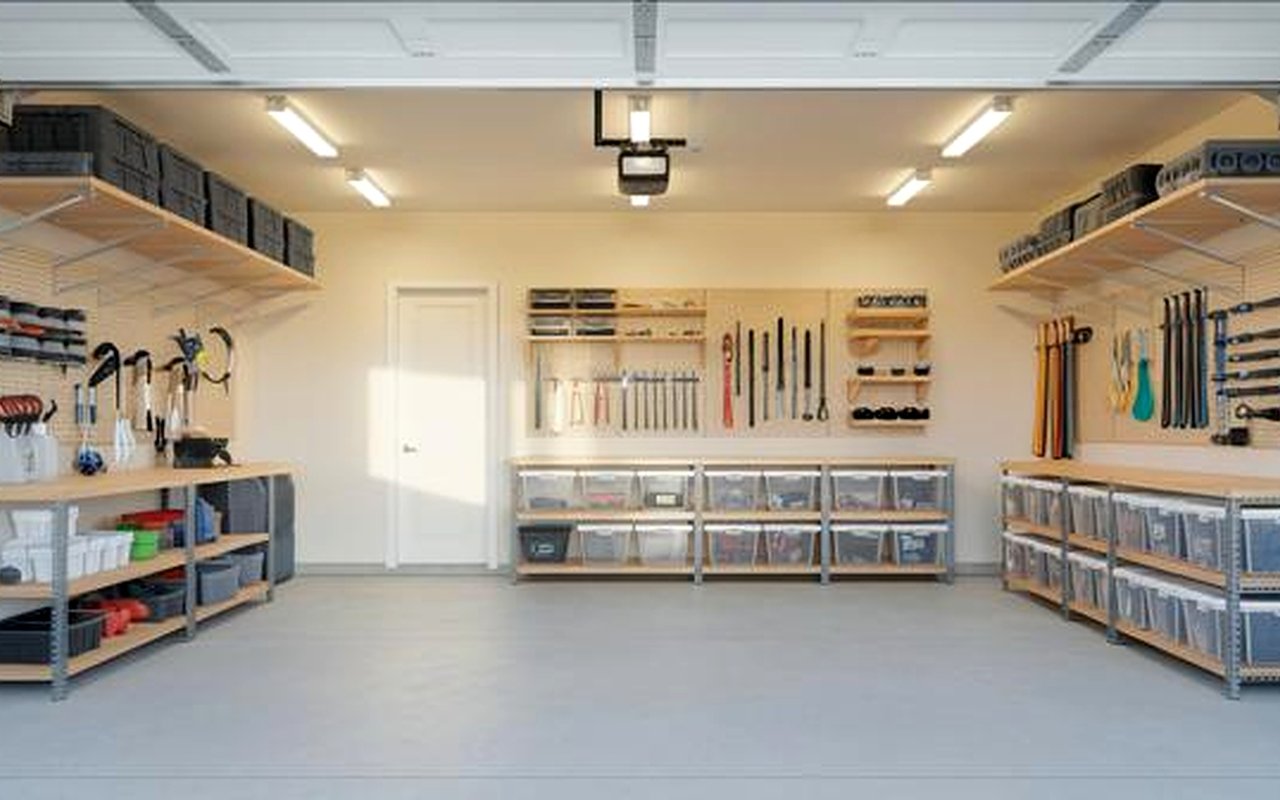
The floor of your garage is valuable real estate, and the fastest way to free it up is to go vertical. Most garages have eight to ten feet of wall height, and much of that space sits completely unused. Wall-mounted shelving, pegboards, and slatwall panels can transform blank walls into highly functional storage without touching the floor at all.
Pegboards are especially effective for tools, garden hand tools, and small equipment. They're inexpensive, fully customizable, and make it easy to grab what you need at a glance. Heavy-duty wall shelving is ideal for bins, paint cans, automotive supplies, and boxed items. If you're investing in shelving, go with metal or reinforced resin over particle board, which tends to bow under weight over time.
Ceiling-mounted storage platforms are another high-impact solution, particularly for items you need a couple of times per year. Bikes, kayaks, paddleboards, and large seasonal bins can all be stored overhead with the right hardware, opening up floor space below. Just make sure to measure clearance before installing anything, so there's enough room to comfortably park a vehicle beneath it.
Wall and Ceiling Storage Solutions Worth Considering
- Pegboard panels for tools, cords, and hand equipment.
- Wall-mounted bike hooks or a ceiling pulley system for bicycles.
- Overhead storage platforms or ceiling-mounted racks for bulky seasonal bins.
- Slatwall panels, which offer more flexibility than pegboard and can hold heavier items.
- Wall-mounted cabinets with doors for items you want contained and out of sight.
Use Clear Bins and Consistent Labeling
The right containers make a notable difference, not just aesthetically but functionally. Clear bins let you see what's inside without opening every box, saving time. Uniform bin sizes also make stacking cleaner and more stable, so the space stays visually manageable.
Labeling is the step most people skip, and it's the reason most organizing projects gradually collapse. When every item has a labeled home, putting items away is just as easy as pulling them out. Use a label maker or even printed and taped labels for a clean, consistent look. Label both the bin and the shelf where it belongs so there's no ambiguity.
Apply this same logic to drawers and cabinets. A label on the outside of a cabinet door removes the guesswork and keeps every member of the household on the same page about where things live.
Labeling and Container Best Practices
- Choose clear, stackable bins in two or three uniform sizes to keep the space looking cohesive.
- Label each bin with its contents and the zone it belongs to.
- Use waterproof labels if bins will be near the garage door or exposed to humidity.
- Color-code bins by category for quick visual identification.
- Avoid overloading bins.
FAQs
How Do I Keep My Garage Organized Long-Term?
Consistency is the key. Once your system is in place, commit to a simple rule: everything goes back to its designated spot after use. Schedule a quick audit once or twice a year, ideally at the beginning of spring and fall, to purge anything new that's accumulated and reassess your zones if your storage needs have changed.
What Are the Best Storage Solutions for a Small Garage?
In a smaller garage, vertical storage is your best friend. Floor-to-ceiling shelving, wall-mounted systems, and overhead racks keep the floor clear and make the most of limited square footage. Folding workbenches and wall-mounted cabinets also help you maximize function without permanently eating up space.
Should I Epoxy My Garage Floor Before Organizing?
Epoxy flooring is worth considering if your concrete slab is in reasonable condition. It's easier to clean, more resistant to stains from automotive fluids or garden chemicals, and makes the space feel more polished. That said, it's not a prerequisite for good organization. Focus on the storage system first, and treat the floor as an upgrade you can layer in later.
Your Garage, Reimagined
A garage that actually works for you is one of those home improvements that pays dividends every single day. Whether you're grabbing gear for a beach day in Narragansett, heading out for a weekend project, or simply parking your car without navigating an obstacle course, the difference a well-organized garage makes is immediate and lasting. More than that, it's a reflection of how your whole home operates, with intention and care.
If you're thinking about making upgrades to your Narragansett home before listing or simply want to understand how improvements like this translate to market value, our team at
Edge Realty is here to guide you. We know this market inside and out, and we can help you identify exactly where your energy and investment will make the greatest impact.